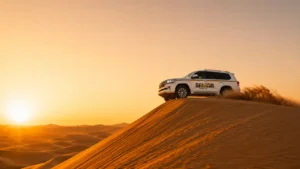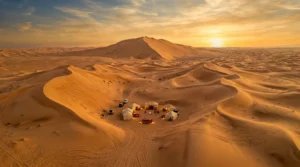

A standard desert safari Abu Dhabi lasts approximately six hours, integrating off-road 4×4 dune bashing, camel riding, and a Bedouin style camp dinner. However, itineraries vary drastically based on the exact time of day and the specific geographical region explored. Morning tours focus purely on off-road adrenaline and speed.
Evening tours provide comprehensive cultural entertainment, sunset photography, and buffet dining. Overnight and Liwa safaris offer deep desert isolation and advanced wildlife tracking. Booking the optimal package requires matching the specific environmental conditions of the dunes with the exact physical and scheduling limits of the travel party.
The Geography of the Abu Dhabi Desert
Different sands serve different purposes. The specific location of an off-road expedition dictates the height of the dunes, the color of the sand, and the overall intensity of the ride. Abu Dhabi features three primary desert zones utilized for commercial safaris.
Al Khatim Desert
Located approximately 45 minutes to an hour outside the city center, Al Khatim is the primary hub for standard commercial safaris. The dunes here are moderate to high, offering an ideal balance of accessibility and thrill. The sand features a distinct, pale yellow to golden hue. Because of its proximity to the capital, Al Khatim hosts the majority of established Bedouin camps, making it the default destination for standard evening and morning tours.
Sweihan Desert (Little Liwa)
Situated near the border of Abu Dhabi, Dubai, and Al Ain, Sweihan is renowned among off-road purists. It requires a slightly longer drive but rewards visitors with massive, complex dune formations. The sand here takes on a richer, red tint. Sweihan is often utilized for advanced dune buggy rentals and specialized private tours seeking steeper slip faces and fewer crowds.
The Rub Al Khali (The Empty Quarter) / Liwa Oasis
Located two hours south of the capital, the Rub Al Khali is the largest uninterrupted sand mass on the planet. The dunes in the Liwa region are colossal, towering hundreds of meters high, featuring deep, striking red and copper tones. Expeditions into Liwa are full day or multi day endurance events requiring specialized fuel logistics. This is the ultimate destination for deep desert isolation and extreme off-road navigation.
Comprehensive Breakdown of Safari Types
To select the correct package, travelers must align the excursion timeline with their physical endurance and schedule limitations.
The Morning Safari: High Adrenaline and Efficiency
Operating between 8:00 AM and 12:00 PM, morning excursions utilize the firm, cool overnight sand for high-speed off-road maneuvers. The morning safari package entirely excludes camp entertainment. There are no large buffet meals, belly dancers, or fire shows. The focus rests strictly on aggressive dune bashing, sandboarding, and camel riding. It is the optimal choice for layover passengers and travelers wishing to keep their afternoons free for urban sightseeing.
The Sunrise Safari: The Photographer’s Expedition
A niche variation of the morning tour, the sunrise safari requires a departure between 4:30 AM and 5:00 AM. The objective is to drive deep into the dunes under the cover of darkness. Guests arrive at a high vantage point to witness the sun cresting over an untouched, trackless landscape. This package provides the best possible lighting for professional photography, completely free of the heavy tourist crowds found later in the day.
The Evening Safari: The Classic Cultural Immersion
The evening safari package means 3:00 PM to 9:00 PM and remains the most heavily booked excursion in the United Arab Emirates. It perfectly balances high action with heritage. The itinerary features golden hour photography and dune bashing, followed by a massive cultural camp production. Guests experience traditional barbecue dining, henna application, falconry displays, and live Tanoura dancing under the stars.
The Overnight Safari: Ultimate Isolation
Extending the evening itinerary until 9:00 AM the following day, the overnight package provides total desert silence. Once the standard evening tourists return to the city, remaining guests sleep in traditional canvas tents and experience a private, trackless desert sunrise far removed from urban light pollution.
Private and VIP Safaris: Absolute Control
For those demanding exclusivity, booking a private 4×4 vehicle eliminates shared transport compromises. Passengers dictate the precise intensity of the dune bashing and bypass hotel pickup delays caused by sharing a car with strangers. VIP camp upgrades further enhance this structure by replacing communal buffet lines with isolated, dedicated table service and premium seating for stage performances.
The Liwa Full Day Expedition
This is an elite, 12 hour endurance safari venturing deep into the Empty Quarter. Reaching the tallest dunes on the Arabian Peninsula, such as the legendary Moreeb Dune, requires specialized off-road vehicles and expert navigation. The Liwa desert safari itinerary includes deep desert wildlife tracking, private oasis lunches, and access to terrain that half-day tours cannot physically reach.
Read More: Things to Do in Your Dubai Tour in 2026
What Exactly Is Dune Bashing?
Dune bashing is not simply reckless driving. It is a highly technical, regulated motorsport requiring specialized hardware and immense driver skill.
Vehicle Modifications and Safety Hardware
The commercial fleet utilized for off-road transport consists of heavily modified 4×4 vehicles, primarily the Toyota Land Cruiser. These vehicles are engineered specifically for the harsh Arabian environment. Every authorized vehicle is equipped with internal steel roll cages, reinforced heavy-duty suspensions, and live GPS satellite tracking to guarantee absolute passenger safety in remote terrain.
Tire Pressure Dynamics
The most critical element of dune bashing is deflation. Before leaving the asphalt, drivers stop at a staging area to deflate the tires from standard highway pressure down to approximately 15 PSI. This drastically increases the surface area of the tire, allowing the heavy vehicle to float on top of the loose sand rather than sinking into it. Upon returning to the road, the tires are re-inflated at specialized compressor stations.
Licensing and Regulation
Off-road passenger transport in Abu Dhabi is strictly regulated. Every commercial safari driver is legally required to hold a specialized desert driving permit issued directly by the Abu Dhabi Police. Securing this license requires passing rigorous practical exams in deep sand recovery, vehicle mechanics, and emergency desert survival.
Core Desert Safari Abu Dhabi Activities Explained
Beyond the 4×4 ride, a premium safari package incorporates several distinct physical activities.
Sandboarding
Similar to snowboarding, this involves descending steep slip faces on a waxed wooden or composite board. Because sand creates significant friction, riders must ensure the bottom of the board is heavily waxed before each run. While falling is highly probable, the soft sand prevents serious injury, making it accessible for absolute beginners.
Quad Biking and Dune Buggies
While standard safaris keep guests inside the Land Cruiser, premium packages offer self-drive options. Quad bikes (ATVs) provide a raw, exposed ride over designated tracks near the camp. Dune buggies (UTVs) are vastly superior, featuring roll cages, bucket seats, and massive suspension travel, allowing drivers to tackle much larger dune formations safely.
Camel Trekking
Referred to as the ships of the desert, camels offer a historically accurate mode of transport. Standard evening safaris include brief, five minute rides near the camp entrance. Full day or private safaris can arrange extended, hour long treks across the ridges, providing a slow, rhythmic perspective of the landscape.
Read More: Best Time for Desert Safari: 2026’s Guide for Dubai and Abu Dhabi
The Bedouin Camp and Cultural Immersion
For evening and overnight guests, the second half of the expedition transitions into a heavily themed cultural retreat.
Culinary Offerings
Standard communal camps operate on a massive buffet system. The menu relies heavily on traditional Levantine and Emirati cuisine. Guests can expect fresh hummus, tabbouleh, mutabal, and hot flatbreads. The main course is an open-air barbecue featuring spiced chicken shish tawook, lamb kebabs, and grilled fish. Traditional Arabic coffee (gahwa) and fresh dates are served continuously as a symbol of hospitality.
Entertainment and Stage Performances
As dinner concludes, the center stage activates. The primary performances include Belly Dancing, which traces its roots across the Middle East, and the Tanoura dance, a mesmerizing Egyptian folk dance involving illuminated, heavily weighted skirts spinning continuously for incredible durations. Fire breathers and fire spinners often conclude the night.
Interactive Heritage
Surrounding the dining area are smaller interactive stations. Guests can smoke flavored shisha from traditional water pipes, receive temporary henna tattoos from local artists, and hold trained hunting falcons, a bird deeply revered in Emirati culture and recognized by the Department of Culture and Tourism as a symbol of national pride.
Climate, Seasonality, and Packing Logistics
Surviving the extreme climate shifts of the Abu Dhabi landscape requires strategic preparation. The desert does not adhere to standard urban weather patterns.
The Thermal Drop
According to data from the National Center of Meteorology, the desert interior experiences massive thermal fluctuations. Sand cannot retain heat. While daytime temperatures can soar past 40 degrees Celsius, nighttime temperatures drop drastically.
The Packing Matrix
- Morning Safaris: Require strategic layering. Guests leave hotels shivering in the early morning fog but will sweat heavily by 10:00 AM. A light hoodie over a breathable t-shirt is mandatory.
- Evening Safaris: Require dual climate packing. Light cotton or linen for the afternoon heat, but a thick fleece jacket must be packed in a bag for the sharp post-sunset chill during the barbecue dinner.
- Essential Gear: The environment reflects massive amounts of solar radiation. High UV polarized sunglasses, SPF 50 sunscreen, and high capacity power banks are non-negotiable. Standard smartphone batteries drain rapidly when searching for signals in remote areas and recording continuous 4K video.
Motion Sickness Mitigation
High-speed maneuvers on shifting sand can induce severe nausea, even in individuals who do not normally suffer from car sickness. Passengers should consume a light, dry carbohydrate snack roughly 45 minutes prior to departure. Large hotel breakfast buffets or heavy liquid intake before a morning ride must be strictly avoided.
Sustainability and Desert Wildlife
While the dunes near the city center are heavily trafficked, the ecosystem remains fragile. Reputable operators work in conjunction with the Environment Agency Abu Dhabi to ensure minimal environmental impact.
Vehicles are restricted to specific corridors to prevent the destruction of sparse desert vegetation, which anchors the dunes and prevents massive dust storms.
Deep desert excursions toward Liwa offer rare opportunities to track resilient native wildlife. With proper navigation, guests can spot sand gazelles, desert foxes, and the legendary Arabian Oryx. Declared extinct in the wild in the 1970s, the Arabian Oryx was successfully reintroduced to the region through massive conservation efforts and now roams the Empty Quarter freely.
Read More: Battle of Deserts: Abu Dhabi vs Dubai Desert Safari
Frequently Asked Questions
What is the average cost of an Abu Dhabi desert safari in 2026?
Standard shared evening safaris begin at approximately 200 AED to 300 AED per person. Upgrading to private vehicles or booking a full day Liwa expedition commands premium pricing, scaling upwards of 2500 AED depending on the duration and VIP camp inclusions.
Is dune bashing safe for pregnant women or infants?
No. High impact off-road driving is strictly prohibited for pregnant passengers, infants under three years old, and individuals with spinal injuries. These guests must explicitly request a soft drive on flat access terrain directly to the Bedouin camp.
Are there bathroom facilities available in the desert?
Yes. All established, reputable Bedouin camps feature modernized, permanent restroom blocks equipped with running water, proper plumbing, and adequate sanitation facilities.
What happens if a sandstorm occurs?
Commercial safaris operate year round. However, severe sandstorms or heavy rain can create hazardous driving conditions. If local authorities restrict deep desert access, reputable operators like Sahara Thrills will immediately offer to reschedule the booking or provide a full refund.
Can dietary restrictions be accommodated?
The standard buffet includes ample vegetarian options such as salads, hummus, and grilled vegetables. However, strict vegan or gluten free requirements should be communicated to the tour operator 48 hours in advance so specific meals can be prepared and isolated.
Is alcohol available at the camps?
Alcohol is available for purchase at most standard communal camps. However, it is strictly prohibited by local UAE regulations during specific Islamic holidays.