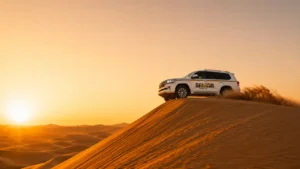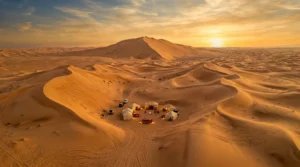
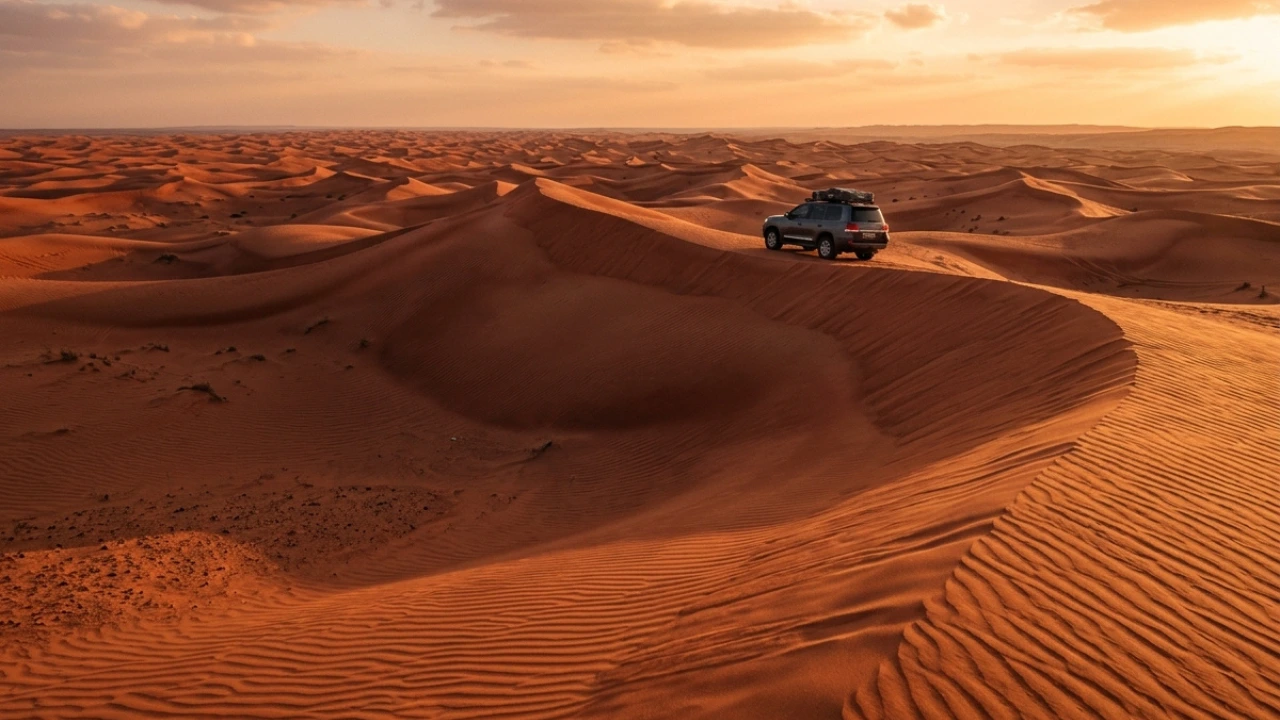
There is no single “correct” desert in Abu Dhabi — the right one depends on how much time you have, how far you are willing to travel, and what kind of experience you want. Al Khatim, under an hour from the city, suits standard morning and evening safaris. Liwa, on the edge of the Rub’ al Khali, suits full-day or overnight trips built around bigger dunes and deeper isolation. Your available time, group and comfort with distance should decide the route, not the package name alone.
Key Takeaways
- Best for a classic, time-efficient safari: Al Khatim, 45 minutes to an hour from the city.
- Best for major dunes and remoteness: Liwa, on the edge of the Rub’ al Khali (Empty Quarter).
- Best for a full-day or overnight trip: Liwa, since the distance rules out a half-day visit.
- Best for scenery with cultural context: Liwa Oasis, pairing dunes with settlements and heritage.
- Main booking consideration: confirm the exact desert region and transfer time, since package names don’t always specify the route.
Quick Comparison: Abu Dhabi Desert Safari Locations
| Location | Travel commitment | Best suited to | Typical experience | Main advantage | Limitation |
| Al Khatim | ~45 min–1 hr each way | First-timers, families, tight schedules | Half-day dune bashing, camel ride, evening camp | Convenient, established camps | Smaller dunes than Liwa; busy at peak times |
| Liwa Desert | ~2–3 hrs each way | Full-day/overnight, photographers, returning visitors | Bigger dunes, deeper isolation | Scale and remoteness | Long transfer; needs planning |
| Rub’ al Khali | Varies — a region, not one stop | Understanding the wider desert | Encountered via Liwa-area routes | Context for “Empty Quarter” | Not a bookable pickup point |
| Tel Moreeb | Part of a Liwa-area stop | Photographers, motorsport fans | A landmark dune on some Liwa routes | Iconic photo stop | Not on every Liwa itinerary |
| Liwa Oasis | ~2–3 hrs each way | Scenery plus heritage | Dunes alongside settlements, date farms | Cultural context | Not a dune-bashing venue |
| Al Wathba | Varies; confirm with operator | Short, quieter outings | Photo stops, camel rides where offered | Close to the city | Fossil Dunes site currently closed |
Travel times vary with traffic, pickup point and season — treat these as working ranges, not fixed figures.
Where Do Desert Safaris Take Place in Abu Dhabi?
“Abu Dhabi desert safari” is a broad umbrella term, not one fixed location. Depending on the package, it might mean a short drive to Al Khatim, a full day toward Liwa, or something in between — and package names don’t always spell out the exact route, so the experience can differ hugely by region: dune height, drive time, crowd levels, and what realistically fits into a half-day slot versus a full-day one.
For the wider picture, Sahara Thrills’ complete Abu Dhabi desert safari guide is a useful starting point. The sections below explain how Al Khatim, Liwa, the Rub’ al Khali, Tel Moreeb, Liwa Oasis and Al Wathba each function, rather than treating them as interchangeable names for one experience.
Al Khatim – Best for a Classic Abu Dhabi Desert Safari
Al Khatim sits roughly 45 minutes to an hour from central Abu Dhabi, making it the practical default for standard morning and evening safaris. Its dunes are moderate in scale — tall enough for genuine dune bashing and sandboarding, but accessible enough that a half-day round trip, camp time included, is realistic.
Because it is close to the city and widely used for standard safari itineraries, Al Khatim is a practical choice for first-time visitors, families and travellers who want a shorter transfer. Many tours combine dune driving with camp-based activities, but the exact camp location and inclusions vary by operator. For what a typical session involves, the activities included in an Abu Dhabi desert safari are worth reading before booking.
The trade-off is scale: Al Khatim’s dunes are generally less dramatic than the larger dune landscapes around Liwa, and popular evening departure windows can feel busier. If your priority is a shorter transfer and a classic half-day format, that is often a reasonable compromise. For more on the terrain here, see the dedicated Al Khatim desert guide.
Liwa Desert – Best for a Full-Day Deep-Desert Experience
Liwa is a different proposition. The drive from Abu Dhabi typically takes around two to three hours each way, ruling it out as a half-day add-on and turning it into a full-day commitment, or an overnight one.
What that longer drive buys you is scale: taller dunes, wider landscapes, and isolation Al Khatim can’t offer this close to the city. It suits travellers who’ve already done a shorter safari, photographers after cleaner light, private groups wanting more space, and anyone visiting specifically for the Empty Quarter. Sahara Thrills’ Liwa Desert Safari from Abu Dhabi page sets out a typical route.
Liwa isn’t the more convenient option, and it isn’t meant to be — guests with only a few hours, or those who prefer a shorter vehicle journey, may find Al Khatim more practical. For those wanting to stay through the night, the overnight desert safari format extends the day into stargazing and a dawn return, where Liwa’s isolation really pays off.
Rub’ al Khali – Understanding the Empty Quarter
Rub’ al Khali, usually translated as the Empty Quarter, isn’t a specific tour stop — it’s the vast sand sea stretching across the southern Arabian Peninsula. According to Experience Abu Dhabi, the emirate’s official tourism site, it covers roughly 650,000 square kilometres across Saudi Arabia, the UAE, Oman and Yemen — the largest continuous sand desert on the planet.
Liwa sits at the edge of the Empty Quarter, which is why the two names are often used together. They are not interchangeable: Liwa is a defined oasis region and a practical gateway for many guided itineraries, while Rub’ al Khali describes the much larger desert extending across national borders. In practical booking terms, an “Empty Quarter safari” from Abu Dhabi usually refers to a Liwa or Al Dhafra route designed to reach this landscape. Ask the operator to confirm the exact route, driving time and included stops before booking.
Tel Moreeb – A Famous Liwa Landmark, Not a Standard Safari Base
Tel Moreeb (also seen spelled Tal Moreeb) is a single dune within the wider Liwa and Al Dhafra area, not a separate desert or a base for standard half-day safaris. According to Experience Abu Dhabi, it stands over 300 metres high with a 50-degree incline, widely regarded as one of the tallest sand dunes in the world.
Its name is commonly translated as “Terrifying Mountain,” and the dune is best known for its dramatic scale and motorsport events. Experience Abu Dhabi lists the Moreeb Hill Climb as part of the Liwa International Festival. Event schedules can change, so travellers planning around the festival should check the official event calendar before confirming dates.
Because Tel Moreeb sits within the Liwa area rather than defining it, not every Liwa itinerary stops here. Travellers who specifically want to see it should confirm with their operator, rather than assuming “Liwa” and “Tel Moreeb” mean the same thing.
Liwa Oasis – Best for Desert Scenery and Cultural Context
Liwa Oasis refers to the settlements and cultivated land along the edge of the dunes, rather than the dunes themselves. Date palm groves, small farms and heritage sites sit alongside — sometimes directly against — some of the tallest sand formations in the country, giving the area a different character to a pure dune-bashing stop.
For travellers wanting more than an adrenaline stop, the oasis setting adds context: a sense of how people have lived alongside this desert for generations. It suits guests pairing a Liwa day trip with a slower pace, or anyone interested in the region’s settlement and agricultural history. This guide keeps things brief here deliberately — a full breakdown of Liwa Oasis’s farms, forts and viewpoints deserves its own dedicated feature, so for now treat it as the cultural counterpart to Liwa’s dune-bashing routes.
What About Al Wathba?
Al Wathba is where the ambiguity around “desert safari location” names becomes clearest. Sahara Thrills’ own service pages describe a general Al Wathba desert area used for quieter, shorter excursions — photo stops and camel rides rather than the dune bashing that defines Al Khatim or Liwa.
That’s separate from the Al Wathba Fossil Dunes, a protected environmental site roughly 45 kilometres east of the city. According to the Environment Agency – Abu Dhabi, the reserve holds more than 1,700 fossil dune formations, some estimated at over four million years old, linked by lit walking trails rather than off-road routes. As of 13 August 2026, the reserve is temporarily closed for development until further notice, so it shouldn’t be treated as a current safari or day-trip destination.
Al Wathba is also loosely associated with camel racing and a separate wetland reserve nearby, which adds to the confusion. If an operator mentions “Al Wathba,” ask specifically what they mean.
From the Field: Al Khatim and Liwa in Practice
Based on Sahara Thrills’ experience running both routes, the difference between Al Khatim and Liwa is not only dune size; it is also how the trip feels. On an Al Khatim evening safari, first-time guests tend to focus on the drive itself, the first dune descent, the option of a gentler drive where available, and then the transition into camp activities after sunset.
Liwa feels more expansive and remote. One of the clearest differences is the point where developed roads give way to long views of open sand and the landscape becomes noticeably quieter. Guests who have already experienced Al Khatim often value Liwa less as a “more intense” version of the same safari and more as a slower, deeper desert journey with more time spent in the landscape.
Al Khatim vs Liwa – Which One Should You Choose?
Neither desert is objectively better; they suit different trips. Let your own time, budget and appetite for a long drive carry more weight than any general rule.
- First-time visitor: Al Khatim; a manageable introduction.
- Family with young children: Al Khatim — families often favour the shorter drive.
- Half a day only: Al Khatim; Liwa’s drive time rules out a half-day format.
- Photographer: Liwa for scale and cleaner light, see the best desert photography spots in Abu Dhabi for a full breakdown of when and where to shoot; an Al Khatim sunrise session is a lower-effort alternative.
- Adventure-focused traveller: Liwa, for bigger dunes and more technical terrain.
- Couple seeking privacy: Either, booked privately; Liwa adds more remoteness.
- Overnight traveller: Liwa for darker skies; an Al Khatim overnight avoids the longer transfer.
- UAE resident wanting something different: Liwa, especially after already trying a standard evening safari.
For how morning, evening, overnight and private formats interact with these two locations, the different types of desert safari in Abu Dhabi guide covers the format side in more depth.
How to Confirm Your Exact Safari Location Before Booking
Package names don’t always specify the route, so ask these before paying a deposit — a well organised operator should answer all of them without hesitation:
- What is the exact desert region for this tour?
- How long is the transfer from my pickup location, both ways?
- Is the advertised duration inclusive of transport time?
- Is the trip shared or private?
- Does the price include camp access, or is that a separate add-on?
- Is this a half-day, full-day or overnight route?
- Which activities are optional and separately charged?
- Can dune-bashing intensity be adjusted for nervous or younger guests?
- Are there age, pregnancy, mobility or health restrictions to flag?
- Can the route change for weather, safety or operational reasons — and what happens if it does?
Sahara Thrills’ Abu Dhabi desert safari packages page is a reasonable starting point for comparing routes before you put these questions to an operator.
Planning Tips for Abu Dhabi Desert Locations
Season affects comfort more than most first-timers expect. The cooler months, broadly October to April, make dune bashing and camp evenings noticeably more pleasant; the best time for a desert safari guide breaks this down further.
Hydration matters regardless of season, and desert temperatures can feel much cooler after sunset than during the afternoon, so carry a light layer for evening and overnight trips. Mention motion sensitivity, children’s ages, pregnancy, mobility needs or other health concerns before booking. If you prefer a gentler ride, ask the operator in advance whether a reduced-intensity or “soft drive” option is available for your route.
Mobile coverage can become less reliable on remote Liwa routes, so download offline maps and share your itinerary if you are travelling independently. Off-road self-driving should only be attempted with suitable equipment and genuine desert-driving experience; inexperienced visitors are better served by an established guided operator. Confirm the route, vehicle requirements and safety arrangements before setting out.
Choosing the Right Abu Dhabi Desert Safari Location
Choosing where to go for a desert safari in Abu Dhabi comes down to a short list of practical questions: how much time you have, how far you’re willing to travel, and whether you want a fast introduction or a slower, more remote day out. Al Khatim answers the first kind of trip well; Liwa, the Rub’ al Khali and Liwa Oasis answer the second.
Share your travel date, pickup location, group size and preferred experience with Sahara Thrills, and the team can help identify whether Al Khatim or Liwa is the more practical route for your trip.
Frequently Asked Questions
Where do most Abu Dhabi desert safaris take place?
Many standard morning and evening safaris from Abu Dhabi use Al Khatim or nearby desert areas because the transfer is relatively short. Liwa and the wider Empty Quarter are more commonly suited to full-day or overnight itineraries because of the longer drive. Always confirm the exact desert region with the operator rather than relying only on the package name.
What is the closest desert safari location to Abu Dhabi city?
Al Khatim is one of the closest commonly used desert safari areas to Abu Dhabi city and is often reached in roughly 45 minutes to an hour, depending on pickup point and traffic. Some operators also use desert areas around Al Wathba, so confirm the exact route before booking.
Is Liwa better than Al Khatim?
Neither is universally better; they suit different trips. Al Khatim gives a complete, time-efficient introduction to dune bashing and camp culture. Liwa suits travellers with a full day or overnight to spare who want much larger dunes and a genuine Empty Quarter experience.
Can I visit the Empty Quarter from Abu Dhabi in one day?
A full-day Liwa trip is possible in a single day, though it involves roughly four to six hours of driving alongside time in the dunes. Travellers wanting a slower pace or extended stargazing usually prefer staying overnight instead.
Is Tel Moreeb part of Liwa?
Tel Moreeb sits within the wider Liwa and Al Dhafra area rather than being a separate destination, but it isn’t automatically included in every Liwa itinerary. Confirm with your operator if seeing it matters to you.
Is Al Wathba suitable for a desert safari?
It depends what’s meant by “Al Wathba.” Some operators use the general area for short, quieter experiences. The protected Fossil Dunes attraction, however, is a nature and heritage site, not a dune-bashing venue, and it’s currently closed for development.
Which Abu Dhabi desert location is best for an overnight trip?
Liwa is generally preferred, thanks to its remoteness, larger dunes and darker skies near the Empty Quarter. Overnight camps closer to Al Khatim also exist, for travellers who want stargazing without Liwa’s longer transfer.