A desert safari packs a lot into one trip: off-road adrenaline, a real taste of Bedouin heritage, and an evening of food and entertainment under the stars. The day typically opens with high-speed 4×4 dune bashing, steep-angle sandboarding, and a calmer camel trek, before settling into camp life — falconry, henna, Tanoura dancing, and a full Arabic BBQ.
Guests chasing extra adrenaline can upgrade to self-drive quad biking or dune buggies; those after something gentler can simply stay for the stargazing. Either way, the operator you book with makes a real difference to how safe and comfortable the day feels.
Standard shared-tour evening packages start around AED 75 per adult, with private, VIP, and ATV-inclusive upgrades typically running AED 150 to 300+ per person. The most comfortable season for a desert safari runs from October through April, when daytime temperaturesD are markedly cooler.
Below is a full breakdown of 16 stops on a typical desert safari off-road sports, cultural experiences, evening entertainment, and the meals that bookend an overnight trip.
What Are the Best Activities in a Desert Safari in Abu Dhabi?
The activities are divided into three distinct phases: the off-road adventure, the cultural camp immersion, and the evening wind-down.
High-Octane Adventure
The first half of your safari is dedicated purely to adrenaline. These activities happen deep in the dunes long before you reach the evening camp.
1. 4×4 Dune Bashing
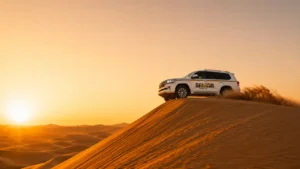
A specially trained driver takes the wheel of a modified, roll-cage-equipped Land Cruiser and threads it across dunes that shift and reshape with the wind, so no two rides ever follow quite the same line. Expect sharp drops, fast climbs, and turns sharp enough to turn first-ride nerves into grins by the second dune.
- Rides typically combine steep climbs, sharp drops, and tight turns through the dune belt for around 30–40 minutes.
- Drivers are trained specifically for desert terrain, reading slope and sand conditions as they go.
- A calmer “soft drive” route is available for guests who’d rather skip the steepest sections.
2. Extreme Sandboarding
Sandboarding turns the desert’s tallest slopes into a natural run. After a short lesson on stance and balance, you strap into a polished wooden board at the top of a dune and lean into the drop, carving down slopes as steep as 50 degrees while sand sprays out behind you. It’s harder on the legs than it looks, and easily one of the most photographed five minutes of the trip.
- No prior boarding experience is needed; guides cover stance, balance, and braking before the first run.
- Dune faces used for boarding can reach a 50-degree incline, among the steepest in the region.
- Boards are shared between guests, so there’s usually a short wait between turns in larger groups.
3. Quad Biking (ATV Tours)
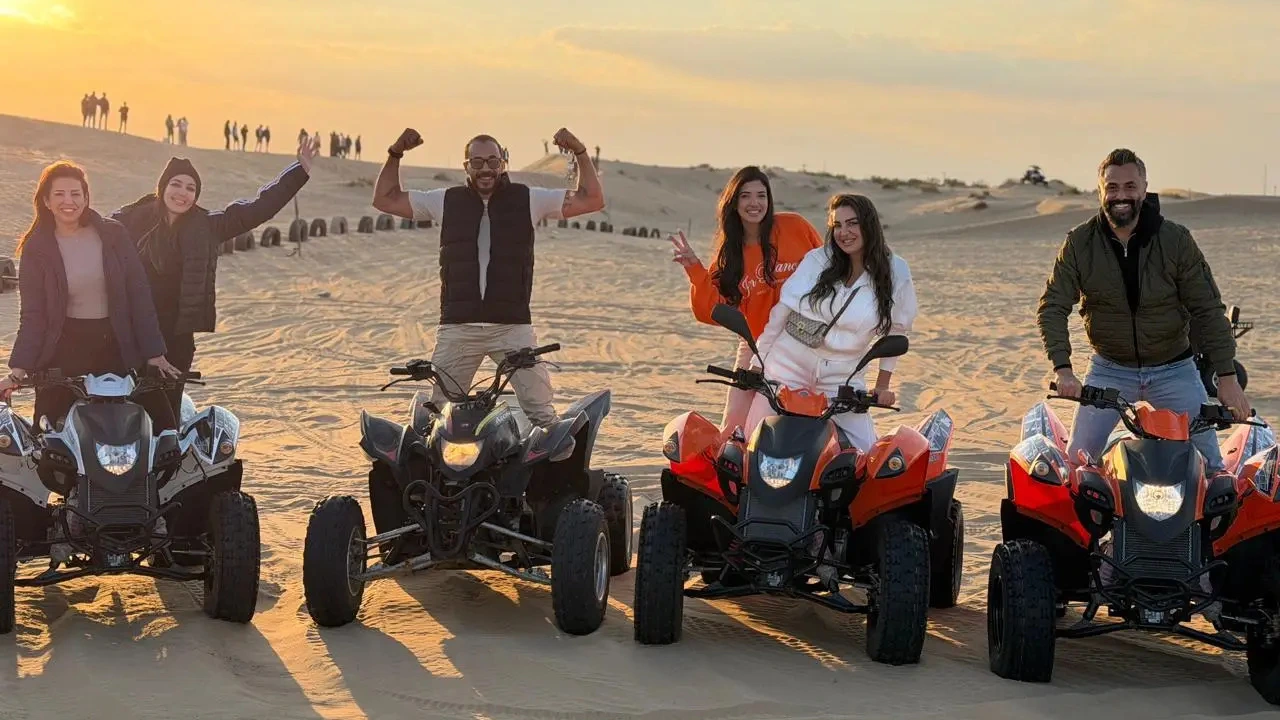
For guests who’d rather drive than be driven, quad biking hands over the controls. Each rider gets their own ATV and a stretch of lower dunes to navigate solo, under the watch of an instructor keeping an eye on speed and spacing between riders. It’s rawer and dustier than dune bashing in the back of a Land Cruiser, and that’s exactly the appeal.
- A short briefing and practice loop come before the main ride, even for guests who’ve ridden an ATV before.
- Age and ID requirements apply, and weight or height limits may apply depending on the bike.
- Closed-toe shoes, goggles, and a helmet are mandatory and provided on site.
Authentic Bedouin Cultural Experiences
After the extreme sports conclude, your safari shifts focus to the rich heritage of the UAE. These activities generally take place in and around the communal Bedouin camp.
4. Camel Trekking and Riding
Long before 4x4s ever crossed these dunes, camel rides in the abu dhabi desert were the original way to move through them, which is how they earned the old nickname “ship of the desert.” Handlers lead small groups on short, easy rides across the sand, giving riders a slow, swaying view of the landscape from several feet up.
- Rides are fully handler-led, so no riding experience or balance skill is required.
- The pace stays slow and steady, which works well for older guests and young children alike.
- Most rides last just a few minutes; it’s more about the view and the photo than the distance covered.
5. Live Falconry Displays
Falconry displays center on a bird the UAE has named its national symbol. A handler walks guests through how falcons were trained for desert hunting long before the region had roads, then sends one into the air after a lure at a speed that’s hard to track with your eyes. Most displays end with guests invited to hold a falcon on a gloved arm for photos, under the handler’s close supervision.
- Handlers usually explain traditional hunting techniques alongside the live flying demonstration.
- Photos with a falcon on your arm are typically included, with the handler controlling how long each guest holds the bird.
- The Environment Agency Abu Dhabi (EAD) heavily protects these majestic birds to preserve the region’s historical biodiversity.
6. Traditional Henna Painting
A henna artist sets up near the camp entrance, ready to turn a few quiet minutes into a lasting souvenir. Working freehand with a paste made from crushed henna leaves, they trace geometric or floral patterns onto the hands or feet, the design as much a reflection of the artist’s style as it is tradition.
- Designs are applied freehand, with a simple pattern usually taking 10–15 minutes.
- The paste stains gradually, so the color looks faint at first and deepens over the following day.
- Most camps offer henna primarily to female guests, though this can vary by operator.
7. Traditional Arabic Costume Photography
Many camps set up a small dress-up corner before dinner with traditional Emirati clothing available to try on the white Kandura for men, the black Abaya for women, against a backdrop of dunes turning gold in the late-afternoon light. It’s a quick stop, but it tends to produce the photo most guests end up using as their profile picture.
- Clothing comes in a range of sizes and can usually be tried on in just a few minutes.
- The setup is typically positioned for the golden-hour light just before sunset.
- No extra fee is usually charged; it’s treated as part of the standard camp experience.
8. Shisha Smoking Lounge
Once dinner winds down, a shisha lounge area opens up for adult guests to relax on traditional Majlis seating (floor cushions and low tables) while enjoying a rotating menu of fruit-flavored tobacco. After a day spent mostly in motion, this is the one stretch of the evening built entirely around sitting still.
- Flavors usually include apple, mint, grape, and other fruit blends, with mixed flavors available on request.
- This area is for adult guests only, in line with local restrictions on tobacco use.
- It’s typically set apart from the main dining area, so non-smokers aren’t sitting in the middle of it.
| Fact:
Abu Dhabi’s Empty Quarter is home to Tel Moreeb, one of the world’s tallest sand dunes, towering over 300 meters high with an extreme 50-degree incline. |
Evening Dining and Relaxation
As the sun sets, the desert camp transforms into a massive, open-air theater and dining hall. Camp infrastructure and food safety are rigorously inspected and mandated by the Department of Culture and Tourism (DCT) Abu Dhabi.
9. Live Tanoura Dancing
Rooted in Egyptian Sufi tradition, a single performer spins continuously, sometimes for ten minutes or more, in a heavily weighted, multi-layered skirt that flares into rings of color as the speed builds. Doing this without stumbling, let alone smiling through it, takes years of practice.
- The skirt alone can weigh several kilograms, with multiple layers built specifically to flare out at speed.
- Performers often add tricks mid-spin, like removing or re-layering parts of the skirt without breaking rhythm.
- Lighting is usually timed to the routine, with the skirt lit from below or with UV effects once it’s dark.
10. Traditional Belly Dancing
Belly dancing is where the evening’s energy really picks up. The movements are precise and isolated, hips, shoulders, and arms all seeming to move independently, and dancers usually work the crowd directly, pulling a few guests up to try some steps of their own.
- Performances typically run across several songs, often building in tempo toward the end.
- Audience participation is common, so don’t be surprised if you’re invited up at some point.
- Costumes are usually elaborate, with coin belts and flowing fabric chosen to move with the dance.
11. Fire Breathing and Stunt Shows
Once the sky is fully dark, the fire performers take over. The act usually moves between fire breathing, fire spinning on chains, and acrobatic or martial-arts-style stunts, all timed for maximum effect once there’s nothing but firelight to see it by.
- Performers train for years before working professionally with fire-breathing or spinning props.
- Acts are typically choreographed to music, with timing built around drumbeats or rhythmic cues.
- Safety crew are usually stationed nearby with extinguishing equipment, just out of the audience’s sightline.
12. Traditional Arabian BBQ Buffet
Dinner is where the evening slows down, and the buffet line does most of the talking. Expect grilled shish taouk and lamb kebabs straight off the coals, alongside hummus, fattoush, and warm flatbread, with trays of Luqaimat, syrup-soaked dumplings, for closing things out.
- Meat dishes are grilled to order or kept warm over coals throughout dinner service.
- Vegetarian and vegan dishes are typically available alongside the standard barbecue spread.
- Luqaimat are best eaten warm, straight off the tray, before the syrup has time to fully soak in.
Overnight Desert Safari
Once the evening guests load back into their 4x4s and head for the city, overnight guests stay behind to experience the desert in near-total silence.
13. Deep Desert Stargazing
Once camp generators switch off for the night, the desert does something cities never let you see: it goes properly dark. With no light pollution for miles, the Milky Way stretches clearly overhead, and even guests who’ve never picked out a constellation before can usually spot a few without much help.
- Conditions are best on clear, moonless nights, so visibility can vary a little by date.
- No special equipment is needed; the naked-eye view alone is usually enough to make out the Milky Way.
- Guides or camp hosts can often point out major constellations on request.
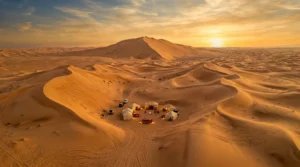
14. Bedouin Tent Camping
Sleeping arrangements lean traditional on the outside and comfortable on the inside. Canvas tents are pitched in a cluster around the main camp, each one fitted with a proper mattress, thermal blankets, and pillows, enough to make a night in the desert feel more like camping with a safety net than roughing it.
- Tents are shared or private, depending on the package booked.
- Bedding is built for desert nights, which can get noticeably cold even after a hot day.
- Basic lighting is usually provided inside each tent for getting settled after dark.
- Shared restrooms and washing facilities are typically a short walk from the tents.
15. Sunrise Desert Photography
Mornings in the desert have a completely different character from the afternoon rush of dune bashing. Waking before dawn means catching the dunes in soft, low light, with sand surfaces still untouched by tire tracks from the day before, a brief window before the wind and the next round of vehicles change the landscape again.
- The hour just after sunrise generally offers the softest light of the day for photos.
- Dunes are typically at their smoothest before any vehicles head back out for the day.
- Bring a layer, desert mornings run colder than the heat later in the day would suggest.
- This works well as a quiet wind-down before the final breakfast and departure.
16. Morning Breakfast
Before the drive back to the city, overnight guests get a simple Arabic breakfast laid out as the sun climbs and the temperature starts to rise again. It’s a low-key send-off, strong coffee, dates, and fresh bread, more about easing back into the day than another big production.
- Gahwa, a strong, lightly spiced Arabic coffee, is a standard part of the spread.
- Dates and labneh are typically served alongside fresh bread.
- Breakfast runs noticeably lighter than the previous night’s BBQ buffet.
- Guests generally have time to watch the sunrise and pack up before breakfast is served.
Morning vs. Evening vs. Overnight: Which Safari Fits Your Trip?
|
Safari Type |
Morning Safari | Evening Safari | Overnight Safari |
|
Typical duration |
3–4 hours |
About 6 hours (≈3:00–9:00 PM) |
Around 18 hours |
|
Meals included |
Light snacks, dates, Arabic coffee |
Full BBQ buffet dinner |
BBQ buffet dinner plus breakfast |
|
Core activities |
Dune bashing, sandboarding, camel riding |
Everything in the morning safari, plus camp culture and evening shows |
Everything in the evening safari, plus stargazing and tent camping |
|
Best for |
Early risers and shorter itineraries |
First-time visitors wanting the full experience in one trip |
Guests who want to experience the desert after dark |
| Starting price | Varies by operator | From around AED 75 per adult (shared tours) |
Varies by operator and package |
What Should You Wear For Desert Safari Activities?
Your clothing directly impacts your physical comfort during these activities. The desert environment demands practicality over high fashion.
To maximize your comfort and mobility:
- Wear breathable fabrics: Choose loose-fitting cotton or linen to combat the afternoon heat.
- Choose the right footwear: Wear open-toed sandals or flip-flops. Sneakers will immediately fill with heavy sand, making walking uncomfortable.
- Pack thermal layers: If you are staying past sunset, bring a fleece or light jacket. Desert temperatures drop rapidly once the sun goes down.
- Bring sun protection: High-SPF sunscreen and polarized sunglasses are mandatory to protect against the intense glare of the golden sand.
When you book a premium expedition, you want zero hidden surprises. Selecting top-tier desert safari packages ensures your vehicles are maintained, your food is hygienic, and your activities are professionally supervised from start to finish.
How Can You Book the Best Desert Safari in Abu Dhabi?
Your safety, comfort, and access to these activities depend entirely on the tour operator you choose. Deeply discounted tours often cut corners on vehicle maintenance and buffet quality.
By booking directly with Sahara Thrills, you guarantee a premium, highly organized itinerary. Whether you want to conquer the dunes on a quad bike or sleep peacefully under the stars, our licensed drivers and highly managed camps ensure your desert experience is flawless, transparent, and completely unforgettable.
Book your Desert Safari in Abu Dhabi and enjoy your trip.
FAQs About Desert Safari Abu Dhabi Activities
How long does a desert safari take?
Most evening safaris require a six-hour commitment, running from roughly 3:00 PM to 9:00 PM. Morning safaris are much shorter, usually taking three to four hours, while overnight safaris span a full 18 hours.
Are children allowed on a desert safari?
Yes. Desert safaris are highly family-friendly. While infants and toddlers cannot participate in aggressive dune bashing, they can safely enjoy camel riding, sandboarding, and the traditional camp entertainment.
Is vegetarian food available on a desert safari?
Yes. High-quality Bedouin camps provide extensive vegetarian and vegan options. The buffet typically includes fresh salads, grilled vegetables, hummus, flatbreads, and lentil-based dishes alongside the standard meat BBQ.
Can I drive the 4×4 Land Cruiser myself?
No. Tourists are not legally permitted to drive the large 4×4 safari vehicles during dune bashing due to strict licensing and insurance laws. If you want to drive, you must book a quad biking or dune buggy package.
What is the best time of year to do these activities?
The most comfortable months for a desert safari abu dhabi are October through April, when daytime temperatures are noticeably cooler, making sandboarding and camel riding far more pleasant than during the summer months.
What do you do in an Abu Dhabi desert safari?
A standard desert safari includes off-road 4×4 dune bashing, camel riding, sandboarding, and a visit to a traditional Bedouin camp. At the camp, guests enjoy a massive barbecue dinner, live belly dancing, fire shows, and henna painting.
Is dune bashing safe for everyone?
Not for everyone. Pregnant guests, children under three, and anyone with a back or neck injury are usually asked to sit this one out. Most operators offer a flatter “soft drive” route instead, so no one misses the camp experience.
Can you drive the quad bikes yourself?
Yes, quad biking is the one self-drive option on a desert safari. It stays on a fenced track at the edge of the dunes rather than the open desert, which keeps speeds and spacing safe for solo riders.
What should I wear for desert safari activities?
Loose, breathable cotton or linen and open-toed sandals work best for the heat and sand. Sneakers fill up fast, and jeans trap heat and restrict movement during the camel ride and dune walks.
Are meals included in all desert safaris?
No. Full barbecue buffet dinners are only included in the Evening and Overnight desert safari packages. Morning safaris only offer light snacks, dates, and Arabic coffee.
What is the best activity for families with toddlers?
Camel riding and the sunset camp experience are the best activities for young children. They allow kids to interact safely with animals and enjoy the cultural performances without the physical stress of aggressive off-road driving.