Choose Al Khatim for a shorter safari-based shoot and Liwa desert safari with a good guide for greater scale. Prioritise side light around sunrise or late afternoon, protect equipment before wind starts, and confirm stop duration before booking. Photograph people only with consent, and verify current drone rules directly with UAE authorities.
Bright sand, deep shadows, wind and heat make desert photography more demanding than it first appears. This guide to desert photography Abu Dhabi helps residents and visitors choose the best and to plan for sunrise or sunset, set up a camera or phone, protect equipment and select a suitable safari format.
What is a desert photography safari in Abu Dhabi?
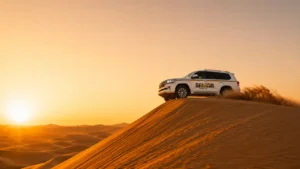
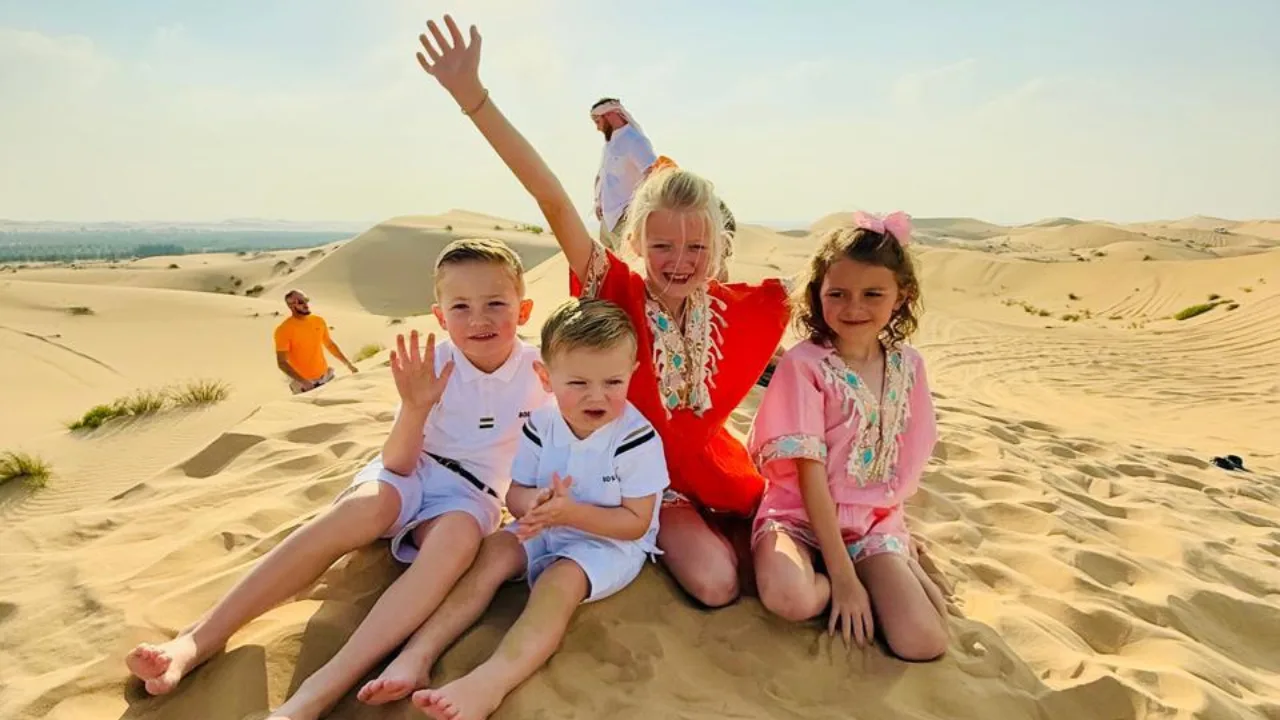
A desert photography safari is a private Al Khatim Desert tour planned around the soft golden-hour light. With your own vehicle, you can stop at the best locations, take your time, and explore at your preferred pace. The experience includes dune portraits, camel silhouettes, Arabic costume photos, and falcon photography, with an optional professional photographer available. For broader planning, see Sahara Thrills’ complete Abu Dhabi desert safari guide.
Where Are the Best Desert Photography Spots Around Abu Dhabi?
Al Khatim is the practical choice for a shorter safari near the city, while Liwa suits photographers who can allow more travel time for larger, layered dunes. For a full breakdown of how these and other Abu Dhabi desert safari locations compare including drive times and which suits your trip see our complete locations guide.
Al Khatim for a shorter shoot
Sahara Thrills currently associates its morning Abu Dhabi safari with Al Khatim. The area can support wide dune scenes, portraits and action photographs without a full Liwa journey. Routes and stopping areas can change, so ask which general area is planned and how long guests can remain outside the vehicle.
Liwa for scale and layered dunes
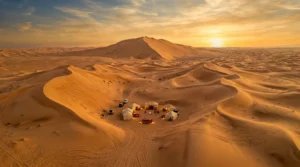
Liwa lies in Al Dhafra at the edge of the Rub’ al Khali, or Empty Quarter. Its scale suits telephoto layers, minimalist compositions and small figures used to show distance. A guided Liwa desert safari may be more practical than independent dune access for travellers without off-road experience.
Do not treat Abu Dhabi and Dubai desert locations as interchangeable. Al Marmoom and Al Qudra are Dubai references, not answers to an Abu Dhabi location query.
7 Best Desert Photography Spots Around Abu Dhabi
The best location depends on the type of photographs you want, the available travel time and whether you are visiting independently or as part of a guided desert safari.
| Sr. No. | Photography Spot | Best For | Why Photographers Choose It | Approximate Drive from Abu Dhabi |
| 1 | Liwa Desert and the Empty Quarter | Large-scale desert landscapes | Towering dunes, clean ridgelines and vast open views make Liwa one of the strongest options for dramatic landscape photography. | 2–2.5 hours |
| 2 | Moreeb Dune | Height, dune faces and golden-hour photographs | Moreeb is known for its steep dune face and impressive scale. It works particularly well for wide compositions and photographs that include a person or vehicle for perspective. | 2–2.5 hours |
| 3 | Qasr Al Sarab Surrounding Dunes | Luxury desert scenes and layered dunes | The surrounding Empty Quarter landscape offers high dunes, clean sand and strong sunrise or sunset views. Access may depend on your accommodation, booking or approved route. | Around 2 hours |
| 4 | Liwa Oasis and Tilal Liwa Area | Dunes combined with oasis scenery | This area offers more visual variety than an uninterrupted dune field, including vegetation, settlements and layered desert landscapes. | 2–2.5 hours |
| 5 | Al Wathba Fossil Dunes | Geological formations and abstract compositions | The fossilised formations create unusual shapes, textures and shadows that look very different from standard sand-dune photography. Check the current opening and access status before travelling. | 45–60 minutes |
| 6 | Al Khatim Desert | Accessible safari and portrait photography | Rolling dunes, visible sand patterns and relatively convenient access make Al Khatim practical for shorter shoots and safari-based photography. | 35–50 minutes |
| 7 | Sweihan Dunes | Red sand, texture and colour contrast | Sweihan is known for warmer, reddish sand tones that can produce strong colour and texture during early-morning or late-afternoon light. | 1–1.5 hours |
Other Desert Areas to Consider For Your Photography
Photographers with more time may also explore the desert around Al Ain and Remah, the wider Al Dhafra and Hameem region, or approved locations near Al Wathba’s wetland and salt-flat scenery.
These areas can offer quieter landscapes, wildlife opportunities and a wider variety of sand colours. However, routes, stopping areas and access conditions may change, so visitors should confirm the current situation with a licensed guide or relevant authority.
Avoid stopping on highways or using informal roadside pull-offs for photography. Do not enter unmarked desert tracks without a suitable vehicle, local experience or a professional guide.
What Is the Best Time for Desert Photography in Abu Dhabi?
The most useful light usually falls shortly after sunrise and during the final hour before sunset. A low sun creates long shadows that reveal dune ridges; colour and visibility are never guaranteed.
| Light window | Visual effect | Best suited to |
| Pre-sunrise | Cool colour and soft contrast | Minimal scenes and silhouettes |
| Sunrise | Side light reveals ripples | Landscapes, portraits and texture |
| Mid-morning | Strong contrast | Graphic details and action |
| Late afternoon | Warm light and long shadows | Layered dunes and people |
| Sunset to blue hour | Bright sky, then muted colour | Silhouettes and tripod images |
Sunrise often means cooler conditions and fewer existing tracks. Sunset is easier to combine with an evening itinerary but may include more tyre marks. Stay briefly after sunset when the schedule allows, and stabilise the camera as light falls.
How Do Season, Haze and Wind Affect the Photography?
Cooler months allow longer outdoor sessions. Experience Abu Dhabi identifies winter, from December to mid-March, as the most comfortable period and notes that late-May to September daytime temperatures can reach about 45°C or higher.
Wind can soften ripples, carry fine sand and reduce visibility. Haze lowers contrast between distant dunes, which may suit layered images but not crisp horizons. Check the same-day forecast, shorten summer shoots and keep phones, batteries and cameras out of a parked vehicle.
Practical Desert Photography Camera Settings
Treat these as starting points and check the histogram because bright sand can mislead automatic exposure.
| Subject | Starting point |
| Dune landscape | ISO 100, f/8 to f/11, shutter as required |
| Walking person or camel | 1/500 sec or faster, continuous autofocus |
| Moving safari vehicle | 1/1000 sec or faster from a safe position |
| Golden-hour portrait | 1/250 sec or faster, f/2.8 to f/5.6 |
| Sunset silhouette | Meter from the sky and reduce exposure if needed |
| Blue hour | Tripod or stable support, raise ISO as light falls |
Shoot RAW when you edit your images. A polarising filter can reduce glare, but it may darken an ultra-wide sky unevenly, so check the effect before every main composition.
Smartphone Desert Photography Tips
A recent phone can work well when exposure and heat are controlled.
- Clean the lens and use the main 1x camera rather than digital zoom.
- Tap the bright sand or sky, then lower exposure until texture returns.
- Use gridlines for a level horizon and burst mode for movement.
- Hold the phone with two hands and stabilise it during blue hour.
- Use portrait mode cautiously because scarves and dune edges can confuse depth masking.
- Shade the phone between shots and do not charge it while overheating.
Composition Ideas for Three-Dimensional Dunes
Side light, scale and simple framing make dunes look more dimensional.
- Photograph across the light so ripples alternate between highlight and shadow.
- Use a longer lens to compress distant dune ridges into layers.
- Add one person, camel or stationary vehicle to show scale, with permission.
- Use footprints or tyre marks as leading lines when clean sand is unavailable.
- Keep low angles safe. Never climb a blind crest or stand in a vehicle route.
For action, decide whether the image is about speed, dust or scale. Use a fast shutter and follow the guide’s position instructions. Sahara Thrills’ desert safari activities guide helps identify parts of an itinerary that may involve movement or limited stop time.
How to Protect a Camera From Desert Sand and Heat
Keep one versatile lens mounted, store equipment in a zipped bag during driving and avoid lens changes in wind. Place the bag on a seat or groundsheet, not directly on sand.
Use a hand blower before a cloth so grains are not rubbed across glass. Clean around the lens mount before any change. When leaving strong air conditioning, keep the camera in its closed bag briefly to reduce sudden temperature change. Carry a spare battery and memory card in a sealed pouch, and never leave equipment in a hot parked vehicle.
Photography Safety, Privacy and Drone Rules
Ask before making identifiable photographs of guests, guides or local residents. UAE Government guidance also cautions against photographing aircraft and people without permission; avoid government buildings, military installations, ports and airports.
Remain in the guide-approved position when photographing vehicles. Never stand on a blind crest or descent line. Travellers who are pregnant or have recent injuries, mobility concerns, back or neck conditions, cardiovascular concerns or other medical uncertainties should obtain suitable professional advice and discuss participation requirements before booking a safari with physically demanding activities.
Do not assume that you can fly a camera drone anywhere in the Abu Dhabi desert. Recreational users and their drones must be registered with the GCAA, flights must remain within approved flying zones, and camera use must comply with applicable UAE laws.
Professional or commercial aerial photography may require additional permissions and security clearance. Always check the Current GCAA recreational rules and approved flying-zone map before every flight, as regulations and permitted areas can change.
What Photography Gear Should You Bring?
Keep your kit simple to reduce lens changes and protect equipment from sand.
Bring:
- One camera with a versatile zoom lens (iPhone or any other smartphone)
- Spare battery and memory card
- Zipped camera bag
- Hand blower and clean lens cloth
- Lens hood
- Power bank for phones
- Compact tripod for sunrise or blue hour
Keep the main lens mounted before entering the desert. Avoid changing lenses when wind is carrying sand. A protective filter is optional, but poor-quality filters may reduce contrast or cause flare.
Which Safari Format Is Better for Photography?
A shared safari suits travellers who mainly want holiday photographs and accept a fixed route. A private format may allow more discussion about timing, safe viewpoints and pacing, but it cannot guarantee unrestricted stops, empty dunes or a particular sunset.
When comparing Abu Dhabi desert safari options, ask about the general route, main photography stop, shared or private vehicle, secure equipment space, dust-producing activities, pickup arrangements and participation requirements.
Sahara Thrills’ current pages contain differing morning time and duration references, so confirm final details for the travel date by contacting Team Sahara Thrills.
Is the desert photography safari suitable for couples and pre-wedding shoots?
Yes. It is a popular choice for couples, engagement sessions, and pre-wedding photography in Abu Dhabi. The golden dunes, soft natural light, camel silhouettes, and traditional outfits create a distinctive setting for memorable photos. Contact us on WhatsApp to discuss your ideas and preferred photography style.
How to Photograph Bright Skies and Dark Dunes
Bright skies and shaded dunes can be difficult to capture in one exposure. Check the histogram and reduce exposure if the sky or sand loses detail.
For stationary landscapes, use exposure bracketing to record lighter and darker frames. Avoid HDR when people or vehicles are moving because it can create blending errors.
Shoot RAW when possible and keep white balance natural. Smartphone users can tap the bright sand or sky, then lower the exposure until dune texture becomes visible.
7 Best Instagram Spots For Photography Locations in Abu Dhabi
Desert landscapes are the main focus of this guide, but Abu Dhabi also offers several architectural, cultural and natural locations for travellers who want more variety in their photography itinerary. The following places can be combined with a desert safari for portraits, cityscapes, travel photography and social-media content.
| Sr. No. | Photography Location | Best For | Best Time to Visit | Practical Photography Tip |
| 1 | Sheikh Zayed Grand Mosque | Islamic architecture, reflections, symmetry and detailed interiors | Early morning or shortly before sunset | Use wide-angle compositions for the courtyards and symmetrical framing around arches and reflective pools. Dress respectfully and follow the mosque’s designated photography rules. |
| 2 | Louvre Abu Dhabi | Modern architecture, geometric patterns, shadows and waterfront views | Late afternoon through sunset | Photograph the light passing through the museum’s dome and use the surrounding walkways to create leading lines. Check current permission requirements for professional or commercial shoots. |
| 3 | Qasr Al Watan | Palace interiors, grand halls, domes and symmetrical architecture | Morning for interiors or late afternoon for exterior photographs | A wide-angle lens works well inside the palace, but keep vertical lines straight to prevent architectural distortion. Tripods and professional equipment may be restricted. |
| 4 | Jubail Mangrove Park | Mangroves, boardwalk scenes, wildlife and natural portraits | Early morning or late afternoon | Use the boardwalk as a leading line and bring a longer lens for birds or wildlife. Avoid disturbing animals or stepping outside approved visitor areas. |
| 5 | The Founder’s Memorial | Minimalist architecture, silhouettes and creative night photography | Sunset and blue hour | Frame the memorial against the changing sky and experiment with silhouettes. After sunset, the illuminated installation can produce more dramatic compositions. |
| 6 | Abu Dhabi Corniche and Breakwater | Skyline views, waterfront scenes, sunsets and lifestyle photography | Late afternoon, sunset or blue hour | Use the shoreline, railings or pathways as leading lines. The Breakwater area can provide wider views of the Abu Dhabi skyline across the water. |
| 7 | Qasr Al Hosn | Historic architecture, cultural details and contrast between old and modern Abu Dhabi | Morning or late afternoon | Focus on doors, textures, watchtowers and traditional architectural details. Avoid harsh midday light, which can remove texture from the pale building surfaces. |
These locations are not substitutes for Liwa or Al Khatim when the objective is desert landscape photography. However, they can help visitors create a more varied Abu Dhabi photography portfolio that includes dunes, architecture, cultural landmarks, nature and urban waterfront scenes.
Before organising a professional, editorial or commercial photoshoot, confirm the latest photography, equipment and permission rules directly with the relevant venue.
What to Wear and Carry?
Wear breathable clothing and closed shoes with good grip. Carry:
- Water
- Sunscreen
- Hat and sunglasses
- Scarf for blowing sand
- Light layer for winter sunrise trips
- Secure pockets or a zipped accessory bag
Keep loose clothing and camera straps away from vehicle doors. Shade phones, batteries and cameras when they are not in use.
Frequently Asked Questions
How do you take good photographs in the desert?
Use early-morning or late-afternoon light to reveal dune texture and avoid harsh shadows. Keep your camera in a zipped bag, leave one lens mounted and use a blower before wiping away sand. A compact tripod can help with sunrise, sunset and blue-hour photographs.
What should you wear for a desert photoshoot in Abu Dhabi?
Wear lightweight, breathable clothing and closed shoes with good grip. Neutral shades, soft greens, white and muted colours work well against golden dunes. Carry a hat, sunscreen, water and a light layer for cooler winter mornings. Avoid loose clothing that may catch on equipment or vehicle doors.
What is the best time for desert photography?
Golden hour, around 60 to 90 minutes before sunset, is ideal for desert photography. The softer light brings out warm tones, long shadows, and the natural texture of the dunes. Sunrise is also a beautiful option, especially for wide landscape shots. Pickup is arranged so you reach the desert when the light is at its best.
Can I wear an Arabic costume or flying dress?
Yes. Traditional Arabic outfits, including kanduras and abayas, are available at the camp at no additional cost. You may also bring your own flying dress, flowing outfit, or photography props. Share your ideas when booking so the session can be planned around the style of photos you would like.
What camera settings are best for desert photography?
For dune landscapes, start with ISO 100 and an aperture between f/8 and f/11. Adjust the shutter speed according to the available light. Use 1/500 second or faster for people and 1/1000 second for moving vehicles. Check the histogram to prevent bright sand from losing detail.
Which desert area is best for photography near Abu Dhabi?
Al Khatim is suitable for travellers who want desert photographs within a shorter safari itinerary. Liwa requires more travel time but offers larger dunes and layered landscapes. The best choice depends on your schedule, preferred photography style and the amount of stopping time available.
Is sunrise or sunset better for desert photography in Abu Dhabi?
Sunrise often provides cooler conditions, cleaner-looking sand and crisp side light. Sunset is easier to combine with an evening itinerary and works well for silhouettes. Choose according to schedule, route and stationary shooting time rather than expecting one period to guarantee better colour.
Can I take good desert photographs with a smartphone?
Yes. Use the main camera, clean the lens, lower exposure to preserve sand detail and avoid digital zoom. Gridlines help level the horizon, while burst mode improves action shots. Keep the phone shaded between photographs because heat can dim the screen or interrupt recording.
What lens is best for Liwa desert photography?
A 24-70mm or 24-105mm zoom is versatile and reduces lens changes in sand. A wide lens includes foreground texture, while a 70-200mm lens compresses distant dune layers. One body with one zoom is often more practical than a larger kit.
How do I stop sand getting into my camera?
Mount a lens before the shoot, keep the camera in a zipped bag during driving and avoid changes when wind is carrying sand. Use a blower before wiping the lens, keep equipment off the ground and clean around the mount before any necessary change.
Can tourists use a drone for desert photography in Abu Dhabi?
Do not assume so. Current recreational GCAA requirements include UAE residency, registration and approved training, while the current rule also prohibits fitting recreational drones with filming equipment. Check the latest GCAA and UAE Drones guidance because regulations and permitted areas can change.