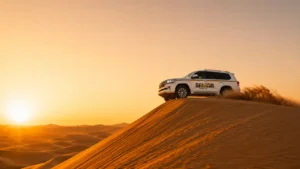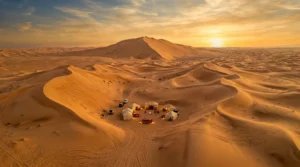
Anyone who has driven out of Abu Dhabi after dark and looked straight up already understands the appeal. Stargazing in the Abu Dhabi desert has become one of the most searched night time activities in the emirate, and for good reason. Away from the glow of the Corniche and the highway lighting, the desert opens into a genuinely dark sky, one where the Milky Way is visible to the naked eye on a clear, moonless night around the falconry experience in Abu Dhabi.
This guide is written for UAE residents planning a weekend escape, tourists trying to fit a night under the stars into a short visit, and anyone weighing up a self-drive trip to a known dark sky spot against a fully organised overnight desert safari.
Whether you are travelling solo, as a couple, or with the whole family, what follows covers where to go, when to go, what you will actually see, and how to stay comfortable and safe once the sun goes down.
Key Takeaways
- Sky darkness increases with distance from Abu Dhabi and Dubai, but no location is free of light or weather variability.
- The Milky Way’s core is clearest from roughly May to October, peaking in July–August; October–April is the more comfortable season for general stargazing and camping.
- A new moon or thin crescent gives darker skies for faint objects; a bright moon suits desert scenery more than deep-sky viewing.
- Al Sadeem Observatory is the only location on this list offering telescopes and a resident astronomer as standard.
- An overnight desert safari gives you time under a dark sky after camp lighting is reduced, which is different from a structured, guided astronomy session.
Where Can You Go Stargazing in the Abu Dhabi Desert?
There are three realistic options within a reasonable drive of the capital, and each suits a different kind of trip. Al Quaa Desert is the furthest but the darkest. Al Wathba, with its purpose-built observatory, is the closest and easiest. Liwa Desert, on the edge of the Empty Quarter, is the most remote and works best paired with an overnight stay.
| Location | Distance from Abu Dhabi | Sky darkness | Access | Facilities | Best for | Main limitation |
| Al Quaa Desert | ~90 min (~125–130km) | Notably dark on clear nights | Regular car to main track; no 4WD needed off-track | None | Experienced stargazers, photographers, groups | No facilities, weak signal, avoid alone |
| Al Sadeem Observatory | ~40–50 min (Al Wathba South) | Moderate; telescopes compensate | Pre-booked, fixed site | Telescopes, lecture area, toilets | Beginners, families, guided learning | Fixed schedule; less about raw darkness |
| Al Khatim Desert | ~45–60 min | Moderate, affected by camp lighting | Regular roads; camps arrange transfer | Varies by camp | First-timers, families, combined activities | Ambient camp light until dimmed |
| Al Wathba Fossil Dunes | ~45km east of city | Low after dark (lit trails) | Managed entry, marked paths | Visitor centre, trails, seating | Daytime nature visits, not stargazing | Site lighting works against stargazing |
| Liwa / Empty Quarter | ~240km (~2.5–3 hrs) | Generally darker (distance from cities) | 4×4 recommended off paved routes | Limited; area resorts/camps | Overnight trips, serious photographers | Long drive, limited services en route |
Al Quaa Desert: The UAE’s Darkest Stargazing Spot
Al Quaa, sometimes called the Milky Way Spot, sits deep in the desert on the road toward Al Ain, roughly 90 minutes from Abu Dhabi city at coordinates near 23.6046, 54.7503. What sets it apart from any beach or park in the city is the near total absence of artificial light for miles in every direction, which is exactly what lets the galaxy’s core stretch clearly overhead.
Getting to the Al Quaa viewing area is easier than many visitors expect.
- Road access: Most of the journey follows paved roads.
- Vehicle type: A regular 2WD sedan can usually reach the main viewing area.
- Driving caution: Stay on the marked track and avoid entering the soft surrounding dunes without a suitable 4×4.
- Final approach: A large roundabout marks the approach, with the viewing area located behind it along a dirt track.
- Mobile signal: Reception can become weak in the remote desert.
- Navigation tip: Download offline maps before leaving Abu Dhabi.
What Makes Al Quaa So Dark
Darkness here comes down to distance and geography rather than anything special about the site itself. There are no towns, highways, or industrial lighting nearby to wash out the sky, and the flat, open desert means nothing blocks the horizon. On a clear, new moon night, the Milky Way’s band is visible without any equipment, which is why photographers and casual stargazers alike treat it as the benchmark dark sky location in the emirate.
Al Wathba Fossil Dunes and Al Sadeem Observatory: A Closer Alternative
If a 90-minute drive does not fit your evening, Al Wathba is a convenient alternative.
- Location: Around 45 kilometres east of Abu Dhabi.
- Main attraction: The protected area contains more than 1,700 fossil dune formations.
- Estimated age: Some formations are believed to be over four million years old.
- Evening access: Illuminated walking trails make the site easier and more comfortable to explore after dark.
Directly nearby sits Al Sadeem Observatory, which opened in 2016 and houses a 16-inch telescope for guided planetary and deep sky viewing sessions, run by the Department of Culture and Tourism Abu Dhabi through its Experience Abu Dhabi Al Wathba Fossil Dunes night tour itinerary. It will not match Al Quaa for pure darkness, since it sits closer to the city’s light dome, but the combination of a telescope, a protected natural site, and an easy paved drive makes it a strong option for a shorter evening out or a first stargazing trip with children.
Liwa Desert: Stargazing Deep in the Empty Quarter
Liwa sits at the edge of the Rub’ al Khali, the world’s largest continuous sand desert, and it is a different proposition altogether from a quick evening drive. The journey out takes roughly 2 to 2.5 hours from Abu Dhabi, and once you arrive, the scale of the dunes, including the towering Tel Moreeb, sets it apart from anywhere closer to the city.
With almost no settlements for a wide radius, an overnight stay at a Liwa Desert safari camp deep in the Empty Quarter routinely delivers some of the clearest skies available anywhere in the UAE, paired with genuine desert silence rather than the ambient hum you still get on the outskirts of Al Quaa.
Al Khatim Desert
Al Khatim is the primary hub for Abu Dhabi’s commercial desert safaris and sits closest to the city, roughly 45 minutes to an hour away. Because most overnight camps operate here, it is the easiest option if stargazing is one part of a broader desert night rather than the sole reason for the trip.
Sky darkness is moderate: better than the city, but affected by the lighting of nearby camps until those lights are dimmed later in the evening. It suits first-timers, families, and anyone combining stargazing with dune bashing, camel riding, or an overnight stay, more than dedicated astrophotographers chasing the darkest possible sky.
What’s Included for Stargazing in the Abu Dhabi Desert
Most of the operators will let you enjoy a peaceful night under the stars with everything you need for a comfortable desert camping experience.
- Meals: Enjoy a live BBQ dinner in the evening and a filling breakfast the next morning.
- Drinks: Soft drinks, tea, coffee, and water are available throughout the tour.
- Private Tents: Stay in a private tent, with one person per tent or two people per tent for couples.
- Camping Equipment: We provide chairs, lights, sleeping bags, private tents, and a fire pit with wood for the bonfire.
- 4×4 Transport: Travel safely and comfortably to Al Quaa in our 4×4 vehicles.
- Experienced Guides: Our friendly adventure guides know the Al Quaa desert well and will help make your stargazing experience smooth, enjoyable, and memorable.
Above given all is most commonly included in your trip.
Rate Details for Stargazing in Abu Dhabi Desert
The Al Quaa overnight stargazing experience is ideal for travellers who want to enjoy the desert night without arranging transport, meals, tents, or camping equipment themselves.
| Package Detail | Rate or Information |
| Shared Overnight Tour | From AED 499 per adult |
| Minimum Booking | Four guests |
| Private Tour for Two | From AED 1,499 per vehicle |
| Additional Guest | From AED 399 per person |
Rates may vary depending on the group size, pickup location, travel date, season, and any private arrangements requested. Guests should contact Sahara Thrills before booking to confirm availability, the final rate, pickup coverage, and the exact package inclusions.
What’s Not Included in the Stargazing in Abu Dhabi Desert?
| Item | Details |
| Personal Expenses | Any personal purchases or extra items requested during the trip |
| Optional Activities | Activities not listed in the confirmed package |
| Special Dietary Requests | Custom meals or premium food options unless arranged in advance |
| Additional Pickup Charges | Extra fees may apply for pickup locations outside the standard Abu Dhabi service area |
| Private Upgrades | Private transport, upgraded tents, or exclusive camp arrangements unless included in your booking |
| Travel Insurance | Guests are responsible for arranging their own travel insurance |
| Photography Equipment | Cameras, tripods, binoculars, and telescopes are not provided unless clearly stated |
| Tips | Gratuities for guides and drivers are optional and not included |
| Extra Meals and Drinks | Any food or beverages requested beyond the included BBQ dinner, breakfast, water, tea, coffee, and soft drinks |
Package exclusions may vary depending on the selected tour, group size, and any special arrangements. Confirm the final inclusions and exclusions with Sahara Thrills before booking.
When Is the Best Time for Stargazing in the Abu Dhabi Desert?
The honest answer depends on what you are optimising for, and this is where a lot of generic advice online gets muddled. There are really two separate “best times.”
- For the brightest Milky Way core: the galactic core climbs highest and stays visible for longer roughly from March through September, with June and July generally offering the strongest views during the dedicated overnight hours.
- For the most comfortable overnight or camping trip: October through April brings noticeably cooler evenings and less atmospheric haze, even though the Milky Way core itself sits lower in the sky during these months.
- Regardless of season, moon phase matters more than the calendar. A new moon night with clear skies gives the best view, since even a partial moon can wash out the fainter parts of the Milky Way.
- Time of night matters too. The darkest, most star-dense window generally falls between roughly 9pm and 3am, once residual daytime heat and haze have settled.
- Check the forecast before you commit to a drive. Fog, dust, or low cloud can quietly ruin an otherwise well-planned trip, so a quick look at the National Centre of Meteorology’s forecast for wind, dust, and visibility conditions is worth the two minutes it takes.
What Can You See in the Abu Dhabi Desert Sky?
What is visible changes through the year and depends heavily on moonlight, so treat the following as a general guide rather than a guarantee.
- The Milky Way: Its bright core is best placed from around May to October, peaking in July–August, and requires a genuinely dark site and a moonless or near-moonless night. Naked-eye only; no telescope needed.
- Orion: A prominent winter constellation, visible on clear evenings roughly December to March, easy to find via its three-star belt.
- Scorpius and Sagittarius: Low in the southern sky during summer evenings; Sagittarius marks the direction of the Milky Way’s core.
- Sirius: The night sky’s brightest star, visible alongside Orion in winter.
- The Pleiades: A compact, naked-eye star cluster visible in autumn and winter skies.
- Bright planets: Venus, Jupiter, Mars and Saturn are regularly visible to the naked eye depending on the time of year; binoculars reveal more detail, and a telescope (such as at Al Sadeem Observatory) is needed to resolve Saturn’s rings or Jupiter’s moons clearly.
- The Southern Cross (Crux): At Abu Dhabi’s latitude of roughly 24.4°N, the constellation can appear low above the southern horizon for a few hours on winter and spring evenings, given a flat, unobstructed horizon and a genuinely dark site. It is a low, easily-missed sight here rather than a highlight to plan a trip around.
- Meteor showers: Occasional “shooting stars” are visible on any clear night away from the city; annual showers such as the Perseids and Geminids produce noticeably higher rates on their peak nights.
- Satellites and the ISS: Visible as steady, moving points of light shortly after sunset or before sunrise; timing is specific to each pass and best checked on the day via a tracking app rather than assumed in advance.
What to see by season from Abu Dhabi (naked eye unless noted; all subject to weather and moonlight)
| Season | Notable highlight | Viewing direction | Equipment |
| Winter (Dec–Feb) | Orion, Sirius, Pleiades | South to overhead, evening | Naked eye; binoculars help with Pleiades |
| Spring (Mar–May) | Southern Cross low on horizon (weather-dependent) | Low south | Naked eye; clear flat horizon needed |
| Summer (Jun–Aug) | Milky Way core, Scorpius, Sagittarius | South, after full darkness | Naked eye |
| Autumn (Sep–Nov) | Milky Way (fading), early return of Orion | South to east, late night | Naked eye |
Overnight Desert Safari and Stargazing Tours: What to Expect
Once you have decided where to go, the next decision is whether to organise the trip yourself or book it as part of a guided overnight desert safari. Both are valid, and the right choice depends on comfort, time, and how much of the planning you want to handle personally.
Self-Drive or Guided Overnight Safari?
A self-drive trip to Al Quaa costs nothing beyond fuel and gives you full control over timing, but it also means bringing your own seating, water, warm layers, and patience for a fully unassisted evening in a remote spot. A guided overnight safari, by contrast, folds stargazing into a wider evening that typically includes hotel pickup, dune bashing earlier in the day, a BBQ dinner, and a Bedouin-style tented camp with bedding for the night, followed by breakfast before the return drive.
Combine Stargazing with Desert Safari Activities
For travellers who want the sky without the logistics, this is usually the simpler route, and it pairs naturally with the wider desert safari Abu Dhabi activities that make up a typical evening or overnight package, from a slow camel ride through the dunes at sunset to the cultural entertainment back at camp.
Confirm the Package Details Before Booking
If you are still deciding between a shorter evening trip and a full overnight stay, it is worth reading through a proper comparison of morning, evening, and overnight desert safaris in Abu Dhabi before booking, since the stargazing experience genuinely differs between the three.
Overnight packages that build in a dedicated stargazing session alongside camping and BBQ dinner are generally the better fit if the night sky is the actual point of your trip rather than an afterthought, but package inclusions, pickup areas, and current pricing vary by operator and season, so it is always worth confirming these details directly with Sahara Thrills before you book.
Independent Stargazing vs Observatory vs Overnight Tour
| Option | Convenience | Astronomy guidance | Sky darkness | Facilities | Best suited to |
| Independent self-drive | Low; you plan everything | None unless self-taught | Can be very good if chosen well | None | Experienced, well-prepared travellers |
| Al Sadeem Observatory | High; fixed booking | Structured, resident astronomer | Moderate | Toilets, telescopes, lecture area | Beginners, families, curious first-timers |
| Evening desert tour | High; transport included | Informal at best | Moderate, depends on camp location | Camp facilities | Visitors wanting one all-round evening |
| Overnight desert safari | High; transport & camp included | Usually informal, camp-led | Improves once camp lights dim | Camp facilities, sleeping arrangements | Guests wanting a full night in the desert |
| Desert resort stay | Very high | Varies by property | Usually better than the city, variable | Full hotel facilities | Comfort-focused travellers, couples |
What to Wear and What to Bring for Stargazing in the Abu Dhabi Desert?
Desert nights are colder than most first-time visitors expect, even when the afternoon felt warm. Understanding just how cold the desert really gets at night will save you from an uncomfortable evening.
- Layer up: start with breathable daytime clothing and add a fleece or light jacket once the sun sets, since desert nights in the cooler months can drop into single digits by early morning.
- Closed-toe shoes: sand cools quickly but can still hide sharp scrub, so trainers work better than sandals once you are walking around in the dark.
- Something to sit or lie on: a blanket, mat, or low folding chair keeps you comfortable and stops neck strain during a long viewing session.
- A dim, red-toned light: a bright white torch or phone flashlight ruins night vision for you and everyone nearby; a dimmed screen or red-light torch is far more considerate.
- Water, snacks, and a charged phone: the nearest fuel station or shop can be a considerable drive away from spots like Al Quaa, and cold weather drains phone batteries faster than usual.
- Offline maps: mobile signal is patchy at best once you are well off the highway.
Safety Considerations for Stargazing in the Desert
Stargazing itself is calm and low risk, but the wider trip carries the same considerations as any remote desert outing after dark.
- Tell someone your planned route and expected return time before heading to a remote spot alone.
- Keep the fuel tank topped up and carry extra drinking water, since services thin out fast once you leave the main roads.
- Stay on packed, marked tracks in a standard car, and only venture onto soft sand with a properly equipped 4×4 and an experienced driver.
- Turn headlights off once parked, and keep noise down out of consideration for other stargazers sharing the same dark sky.
- If you are pregnant, managing a health condition, recovering from a recent injury, or simply unsure whether a long overnight trip in cooler, remote conditions is right for you, it is worth checking with a doctor before committing to an overnight desert stay.
- For anyone without desert driving experience, a guided overnight safari with a licensed operator removes the navigation and off-road risk entirely, letting you focus on the sky rather than the drive.
| Special Note: If cooler overnight desert temperatures or remote locations are a concern for a specific health condition, it’s worth a quick check with a doctor before booking an overnight stay. |
Final Thoughts: Planning Your Night Under the Stars
Good stargazing in the Abu Dhabi desert comes down to three things working together: getting far enough from city light, picking a clear, moon-quiet night, and dressing for a temperature drop that catches most first-timers off guard. Al Quaa remains the benchmark for pure darkness, Al Wathba is the easiest quick trip with a telescope thrown in, and Liwa rewards anyone willing to make a full overnight stay of it. If you would rather leave the logistics, pickup, and camp setup to someone else, Sahara Thrills’ desert safari packages can help you compare options and confirm current availability, pickup locations, and what is actually included before you head out for your night under the stars.
FAQs About Stargazing in the Abu Dhabi Desert
Where can I go stargazing in the Abu Dhabi desert?
The three main options are Al Quaa Desert, widely regarded as the darkest spot in the UAE and about 90 minutes from the city toward Al Ain, Al Wathba Fossil Dunes with its Al Sadeem Observatory roughly 45 minutes east of the city, and Liwa Desert on the edge of the Empty Quarter for a full overnight camping experience deep in the dunes.
Do I need a 4×4 to reach the Al Quaa Milky Way spot?
Not necessarily. Most of the route follows a paved road, with only the final stretch turning to packed gravel or dirt. A regular sedan can usually reach the main viewing area if you stay on the marked track. A 4×4 is only needed if you plan to venture off-road into the surrounding dunes.
When is the best time to see the Milky Way in the Abu Dhabi desert?
The Milky Way’s bright core is most visible from around March to September, peaking in June and July, ideally on a new moon night between 9pm and 3am. If comfort matters more than peak visibility, October to April offers cooler evenings and clearer, less hazy skies for general stargazing and camping.
What is the closest desert to Abu Dhabi for a quick stargazing trip?
Al Wathba, around 45 kilometres east of the city, is the closest option and includes the Al Sadeem Observatory for telescope viewing. For genuinely dark, light-pollution-free skies, though, most visitors still make the longer drive to Al Quaa or plan an overnight stay further out in Liwa.
Can stargazing be combined with an overnight desert safari?
Yes. Several Abu Dhabi desert safari operators, including Sahara Thrills, run overnight packages that combine dune bashing, a BBQ dinner, and a dedicated stargazing session with Bedouin-style camping and a morning breakfast. It is worth confirming current package inclusions, pickup details, and pricing directly before booking.
Is desert stargazing safe for families with young children?
Stargazing itself is a calm, stationary activity suitable for most ages once the group has arrived safely. The bigger considerations are the sharp overnight temperature drop and the driving involved in reaching remote spots after dark, so families often prefer a guided overnight safari camp over a late-night self-drive trip.